A layoff represents one of the most challenging experiences in professional life, affecting millions of workers across industries each year. Understanding what layoffs are, why they happen, and how they differ from other forms of employment termination is crucial for both employees and employers navigating today’s dynamic business environment.
What is a Layoff?
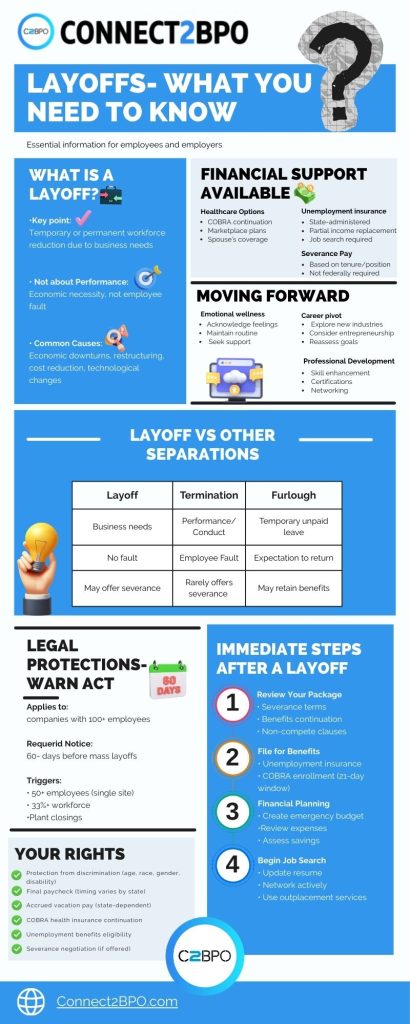
A layoff occurs when an employer terminates an employee’s position due to business-related reasons rather than individual performance issues. Unlike being fired, which typically results from poor performance or misconduct, layoffs happen when companies need to reduce their workforce for operational, financial, or strategic reasons beyond an employee’s control.
Layoffs can be either temporary or permanent. In temporary situations, employees may be recalled when business conditions improve. Permanent layoffs, however, indicate that the position has been eliminated with no expectation of the employee returning to the company.
Understanding Different Types of Layoffs
Temporary Layoffs
Temporary layoffs occur when employers suspend employment for a limited period with the intention of rehiring workers once conditions stabilize. This approach is common in industries experiencing seasonal fluctuations or brief economic downturns. During temporary layoffs, employees may retain certain benefits and typically qualify for unemployment compensation while awaiting recall.
Permanent Layoffs
Permanent layoffs signify the complete elimination of positions with no plans for employee return. These often result from company downsizing, facility closures, mergers and acquisitions, or technological changes that render certain roles obsolete. Affected workers must seek new employment opportunities as there is no expectation of being recalled.
Mass Layoffs
Mass layoffs involve the simultaneous termination of large numbers of employees, typically during major restructuring initiatives, corporate mergers, or significant industry downturns. In the United States, the Worker Adjustment and Retraining Notification (WARN) Act regulates mass layoffs, requiring employers with 100 or more full-time employees to provide 60 days’ advance notice before implementing large-scale workforce reductions.
Voluntary Layoffs
Voluntary layoff programs offer employees the option to leave their positions in exchange for incentives such as severance packages, extended benefits, or early retirement opportunities. This approach allows companies to reduce headcount without mandating terminations, while providing employees who voluntarily accept with financial support for their transition.
Why Do People Get Laid Off? Common Reasons for Layoffs
Cost Reduction and Financial Pressures
Companies facing declining revenues or profitability often implement layoffs as a primary cost-cutting measure. When businesses struggle to cover operational expenses or need to reduce debt, workforce reduction can provide immediate financial relief by decreasing payroll obligations, typically one of the largest business expenses.
Organizational Restructuring and Realignment
During mergers, acquisitions, or internal reorganizations, companies frequently identify redundant positions or overlapping functions that no longer align with the new organizational structure. Restructuring efforts aim to create leaner, more efficient operations, which may necessitate eliminating certain roles or entire departments.
Technological Advancement and Automation
Rapid technological progress and increasing automation have made some positions obsolete. When companies invest in new software systems, artificial intelligence, or automated machinery that can perform tasks previously handled by employees, layoffs may result. This trend continues to reshape industries, particularly in manufacturing, retail, and customer service sectors.
Economic Downturns and Market Conditions
During recessions or periods of reduced consumer demand, businesses often downsize to match current market realities. Economic uncertainty can force companies to reduce their workforce to ensure survival when revenues decline significantly. Industry-specific downturns can also trigger layoffs even when the broader economy remains stable.
Offshoring and Outsourcing Decisions
Companies pursuing cost efficiency may relocate operations to regions with lower labor costs or outsource specific functions to third-party providers. These strategic decisions often result in domestic layoffs as work transitions overseas or to external vendors. While potentially reducing operational costs, this approach significantly impacts local workforces.
Business Strategy Changes
Shifts in corporate strategy, such as exiting certain markets, discontinuing product lines, or pivoting business models, can lead to layoffs. When companies decide to focus resources on different areas or abandon underperforming segments, positions associated with those initiatives may be eliminated.
What is the Difference Between a Layoff and Being Fired?
Understanding the distinction between layoffs and terminations for cause is essential for affected employees.
Layoffs occur due to business needs unrelated to employee performance. They reflect organizational decisions about workforce size, structure, or direction rather than individual job performance. Laid-off employees typically maintain positive employment records and may be eligible for rehire if conditions improve.
Being fired results from performance deficiencies, policy violations, or behavioral issues attributable to the individual employee. Terminations for cause indicate that the employee failed to meet job expectations or violated company policies, potentially affecting future employment prospects and limiting eligibility for unemployment benefits.
Key differences include:
- Reason: Layoffs stem from business decisions; firings result from individual performance or conduct issues
- Employee fault: Layoffs are no-fault separations; firings indicate employee responsibility
- Unemployment benefits: Laid-off workers typically qualify for unemployment insurance; fired employees may not
- References: Layoffs generally don’t damage professional reputation; firings can negatively impact future opportunities
- Rehire potential: Companies may rehire laid-off employees; fired individuals rarely return
The Impact of Layoffs on Employees
Emotional and Psychological Effects
Layoffs create significant emotional distress for affected workers. The sudden loss of employment can trigger anxiety, depression, and feelings of uncertainty about the future. Many experience a sense of loss (not just of income), but of professional identity, daily structure, and workplace relationships. The psychological impact extends beyond the individual, affecting families and personal relationships.
Financial Consequences
The immediate financial impact of job loss creates substantial stress. Without regular income, employees must quickly assess their financial situation, potentially drawing on savings, adjusting budgets, and identifying alternative income sources. Laid-off workers may face challenges meeting mortgage payments, covering healthcare costs, and maintaining their standard of living while searching for new employment.
Career Implications
While layoffs don’t reflect poorly on individual performance, they can create career disruptions. Gaps in employment history may require explanation to future employers. Some workers must consider career pivots, industry changes, or geographic relocation to find comparable positions. The experience often prompts reflection on career goals and may lead to pursuing additional training or education.
Available Support Resources
Laid-off employees should explore available resources including:
- Severance packages: Many employers offer compensation to support the transition period
- Unemployment benefits: Government programs provide temporary financial assistance
- COBRA health coverage: Continuation of employer-sponsored health insurance
- Career transition services: Outplacement support, resume assistance, and job search coaching
- Professional development: Skill-building programs and retraining opportunities
The Impact of Layoffs on Employers
Financial Benefits and Costs
While layoffs can provide immediate cost savings through reduced payroll expenses, they also incur significant costs. Companies must often pay severance packages, fulfill legal notice requirements, and potentially face litigation expenses. The financial calculus of layoffs extends beyond simple payroll reduction.
Workforce Morale and Productivity
Remaining employees often experience decreased morale, increased anxiety about job security, and reduced trust in organizational leadership following layoffs. This “survivor syndrome” can diminish productivity, engagement, and commitment. The loss of experienced staff also represents a departure of institutional knowledge and expertise that can hamper operational efficiency.
Problems with Reputation and Employer Brand
How companies handle layoffs significantly impacts their reputation among employees, customers, and the broader business community. Organizations that manage reductions insensitively or without transparency may struggle with talent attraction and retention. Conversely, companies demonstrating compassion and providing robust support maintain stronger employer brands.
Long-term Strategic Considerations
Layoffs should align with long-term business strategy rather than serving as quick fixes for short-term problems. Companies must consider whether workforce reductions support sustainable growth or whether they risk losing critical capabilities needed for future success. Strategic layoffs targeted at non-core functions differ fundamentally from across-the-board cuts that may undermine competitive positioning.
Legal Requirements and Compliance Considerations
The WARN Act Requirements
The federal Worker Adjustment and Retraining Notification (WARN) Act requires all employers in the United States with 100 or more full time employees to provide 60-day notice in advance of mass layoffs or plant closings. U.S. Department of Labor The Act applies to:
Mass Layoffs: At least 50 employees are laid off during a 30-day period if the laid-off employees made up at least one third of the workforce, or 500 employees are laid off during a 30-day period regardless of workforce size. Fisher Phillips
Plant Closings: An employer must give notice if shutting down an employment site will cause 50 or more employees to lose their jobs in 30 days. Factorial HR
Penalties: An employer breaking WARN laws must pay affected employees back pay and benefits for up to 60 days, and failing to notify local government leads to a fine of up to $500 per day. Factorial HR
Anti-Discrimination Protections
Federal law prohibits layoff decisions based on protected characteristics. Employers must ensure criteria are objective and consistently applied.
Title VII of the Civil Rights Act (1964): Title VII prohibits discrimination and harassment based on race, color, religion, national origin, or sex (including pregnancy), and retaliation against individuals who claim Title VII rights. EEOC Applies to employers with 15+ employees.
Age Discrimination in Employment Act (ADEA): The ADEA prohibits age-based harassment, discrimination in benefits, and mandatory retirement ages for most employees, protecting workers aged 40 and older. Nolo Applies to employers with 20+ employees.
Americans with Disabilities Act (ADA): The ADA forbids discrimination against qualified individuals with disabilities who can perform essential job functions, requires reasonable accommodations, and forbids retaliation. EEOC Applies to employers with 15+ employees.
Companies should document decision-making with objective criteria to protect against discrimination claims.
Severance Agreements
Federal law does not mandate severance pay, though many employers offer packages through contracts, collective bargaining agreements, or company policy. When employees over 40 are involved, special requirements apply to ensure waivers of age discrimination claims are knowing and voluntary.
Severance packages typically include financial compensation, healthcare continuation, outplacement services, and releases of legal claims. Employees should carefully review agreements and may consult legal counsel before signing.
State-Specific Regulations
States impose varying requirements for final paychecks and accrued vacation payout. While federal law requires payment for all time worked, states set their own deadlines—some requiring immediate payment upon termination, others allowing payment by the next regular payday. Not all states mandate vacation payout; where required, timing and conditions vary significantly.
Employers must research requirements in each state where they operate and ensure compliance to avoid penalties including back pay, fines, interest, and potential additional compensation.
Important Note: Employment laws are subject to change. Employers should consult qualified employment law attorneys to ensure full compliance with all applicable federal, state, and local requirements when planning workforce reductions.
Best Practices for Managing Layoffs Humanely
Clear and Transparent Communication
Effective communication throughout the layoff process helps maintain trust and dignity. Employers should:
- Clearly explain business reasons necessitating workforce reductions
- Provide advance notice whenever possible
- Communicate decisions directly and personally rather than through impersonal methods
- Offer opportunities for affected employees to ask questions
- Keep remaining employees informed about organizational changes
Transparency reduces uncertainty and demonstrates respect for employees, even during difficult circumstances.
Comprehensive Support Services
Providing robust support resources helps employees transition successfully:
- Career counseling: Professional guidance for job search strategies
- Resume and interview coaching: Assistance with application materials and interview preparation
- Outplacement services: Dedicated resources for finding new employment
- Skills training: Opportunities to develop new capabilities for job market competitiveness
- Mental health support: Counseling services to address emotional impacts
These investments demonstrate organizational values and support positive outcomes for departing employees.
Compassionate Implementation
How layoffs are conducted matters enormously. Best practices include:
- Conducting notifications privately and respectfully
- Involving direct managers in communication when appropriate
- Allowing reasonable time for employees to collect belongings
- Maintaining dignity throughout the process
- Providing clear information about final pay, benefits, and next steps
Treating employees with compassion during layoffs reflects organizational character and influences long-term reputation.
Supporting Remaining Employees
Organizations must address the needs of employees who remain after layoffs:
- Acknowledge their concerns and emotions openly
- Clarify roles, responsibilities, and expectations going forward
- Provide reassurance about organizational stability when appropriate
- Maintain open communication channels
- Recognize increased workloads and provide necessary support
Neglecting surviving employees can trigger voluntary turnover and further destabilize the organization.
Considering Alternatives to Layoffs
Before implementing layoffs, companies should explore alternative cost-reduction strategies:
- Hiring freezes: Suspending new recruitment while allowing natural attrition
- Reduced hours: Implementing shortened workweeks to spread available work
- Pay reductions: Temporary salary decreases for all or senior employees
- Voluntary retirement programs: Incentivizing early retirement for eligible employees
- Voluntary unpaid leave: Offering extended leave options
- Reassignment: Moving employees to different roles rather than eliminating positions
These alternatives may achieve necessary cost savings while minimizing workforce disruption.
Frequently Asked Questions About Layoffs
How do companies decide who to lay off?
Companies typically use multiple criteria to make layoff decisions, including:
- Seniority: Length of service with the organization
- Job performance: Recent performance evaluations and accomplishments
- Skills and competencies: Alignment with future business needs
- Position criticality: Essential functions versus discretionary roles
- Budget allocation: Departmental or functional area targets
Layoff criteria should be objective, consistently applied, and documented to ensure fairness and legal compliance. Many organizations use scoring systems combining these factors to make determinations as equitable as possible.
Can I negotiate my severance package?
Severance package negotiation is often possible, particularly for more senior positions or when employers have flexibility. Aspects that may be negotiable include:
- Severance payment amount: Additional weeks of salary
- Healthcare coverage duration: Extended COBRA benefits
- Outplacement services: Enhanced career transition support
- Unused vacation payout: Accelerated or enhanced accrual payment
- Reference agreements: Commitments regarding employment verification
- Non-compete modifications: Adjustments to restrictive covenants
Employees should review severance offers carefully, research standard practices for their industry and level, and consider consulting an employment attorney before accepting or countering offers.
Are laid-off employees eligible for unemployment benefits?
Laid-off workers typically qualify for unemployment insurance benefits, as layoffs constitute involuntary job loss through no fault of the employee. Eligibility requirements vary by state but generally include:
- Sufficient work history and earnings during the base period
- Active job search efforts
- Availability and willingness to work
- Weekly certification of unemployment status
Employees should file unemployment claims promptly after layoff notification, as benefit determination and processing can take several weeks. Severance payments may affect benefit timing in some states.
What should I do immediately after being laid off?
Take these important steps following a layoff:
- Review severance materials carefully: Understand offered compensation and benefits
- File for unemployment benefits: Submit applications promptly
- Understand healthcare options: Evaluate COBRA continuation versus marketplace alternatives
- Assess your financial situation: Review savings, expenses, and budget adjustments
- Update resume and LinkedIn profile: Prepare application materials
- Activate your network: Inform contacts about your job search
- Consider skills development: Identify training that enhances marketability
- Take care of mental health: Seek support from family, friends, or professionals
Can I be laid off while on protected leave?
Being on family medical leave, disability leave, or other protected leave doesn’t provide absolute protection against layoffs, but strict rules apply. Employers can include employees on protected leave in legitimate layoffs only if:
- The layoff would have occurred regardless of leave status
- The position was eliminated as part of genuine business restructuring
- The employer can demonstrate the decision was unrelated to leave usage
However, if layoff timing appears connected to leave-taking or targets employees on protected leave disproportionately, this may constitute illegal discrimination or retaliation.
What rights do I have if I believe discrimination was involved?
Employees suspecting discriminatory layoff decisions should:
- Document concerns: Record relevant facts, conversations, and patterns
- Review company communications: Analyze stated rationale for layoff decisions
- Consult an employment attorney: Seek professional legal advice
- File complaints with appropriate agencies:
- Equal Employment Opportunity Commission (EEOC) for federal claims
- State fair employment agencies for state-law claims
- Preserve evidence: Maintain performance reviews, emails, and other relevant materials
Time limits apply to discrimination claims, so prompt action is essential. Retaliation against employees who raise discrimination concerns is illegal.
How long does it typically take to find a new job after a layoff?
Job search duration varies significantly based on multiple factors:
- Industry and role: Some sectors have more available positions than others
- Geographic location: Local job market conditions affect opportunities
- Experience level: Senior positions typically take longer to fill
- Economic conditions: Broader employment trends influence hiring
- Search intensity: Active networking and applications accelerate results
Average job searches range from three to six months, though specialized roles or challenging market conditions can extend timelines considerably. Maintaining consistent effort and remaining flexible about opportunities supports more rapid reemployment.
Should I accept a job offer in a different field after a layoff?
Consider these factors when evaluating career changes following layoffs:
- Financial necessity: Immediate income needs may outweigh long-term career considerations
- Transferable skills: How your existing capabilities apply to new industries
- Growth potential: Long-term opportunities in alternative fields
- Personal interests: Alignment with your values and aspirations
- Market trends: Industries with expanding employment prospects
Career transitions can open new opportunities and provide fresh perspectives. However, evaluate offers carefully to ensure they support your long-term professional goals rather than representing purely reactive decisions.
Moving Forward After a Layoff
While layoffs create undeniable challenges and uncertainty, they also present opportunities for reflection, growth, and new directions. Many professionals who experience layoffs ultimately discover career paths offering greater satisfaction, better compensation, or improved work-life balance.
The keys to successful navigation of layoffs include:
- Maintaining perspective: Remember that layoffs reflect business decisions, not personal failures
- Leveraging support resources: Utilize available services and assistance
- Staying professionally active: Continue networking and skill development
- Remaining financially disciplined: Manage resources carefully during transition periods
- Taking care of wellbeing: Prioritize physical and mental health
For employers, handling layoffs with transparency, compassion, and comprehensive support demonstrates organizational values that endure beyond immediate business challenges. Companies that prioritize humane practices during difficult periods build stronger cultures and maintain competitive advantages in talent markets.
Understanding what layoffs are, why they occur, and how to manage their impact empowers both employees and employers to navigate these challenging transitions more effectively, ultimately emerging stronger from the experience.
Conclusion
Layoffs represent complex organizational decisions with profound implications for employees, companies, and communities. By understanding the various types of layoffs, reasons behind workforce reductions, legal requirements, and best practices for managing these transitions humanely, both employers and employees can approach these difficult situations with greater knowledge and preparation. Whether facing a layoff personally or implementing workforce reductions organizationally, compassion, transparency, and comprehensive support remain essential to navigating these challenges successfully.